Cypder Solutions designs and develops websites, web applications, ecommerce platforms and custom software around the way your business actually operates. From customer-facing experiences to internal systems, we bring design, development, integrations and business workflows together in one build.
One idea.
One development team.
Every build starts with what needs to work, who needs to use it and how it fits into the wider business.
Build a website or online store around how customers discover, compare and buy, with a clear experience across every screen.
Business websites · E-commerce · Landing pages
Turn complex requirements into simple digital products that customers, employees and partners can use easily, with experiences built around how they actually work.
Customer portals · Mobile applications · Web applications
Replace scattered tools and manual processes with software built around your workflows, permissions, data and day-to-day operations.
CRM systems · Admin dashboards · Operations software
Connect your business tools so information flows smoothly, processes stay in sync and repetitive work takes less effort.
APIs · System integrations · AI automation · Custom workflows
Whether you need a better customer experience, a smoother internal workflow or a new digital product, we build around the work that needs to get done.
Create simpler ways for customers to discover, buy, book, access and manage what your business offers.
Bring everyday operations into one connected system, with the workflows, permissions and information your team needs to work efficiently.
Turn a new product or business idea into a working digital platform, with the flexibility to evolve as users, data and requirements grow.
Every development project has different demands. A business website, an e-commerce platform and a custom software application each need the right structure, functionality and technology to work reliably in real-world use.
Define what the website or software needs to do. Map user requirements, business workflows, essential features, integrations and project constraints to establish a clear development scope before work begins.
Plan the user experience, application architecture and data flows around the intended use. Establish how pages, features and systems connect, so the solution is practical to navigate, maintain and extend.

Develop responsive interfaces, custom features, backend logic and required system integrations. Whether it’s e-commerce functionality, a customer portal or a business application, each component is built to fulfil a defined requirement.
Test user flows, forms, integrations, responsive behaviour and critical functionality. Resolve identified issues, prepare the production environment and deploy the solution with the checks needed for a dependable launch.
Clear functionality, considered architecture and tested implementation give your digital product a foundation it can build on.
A broad mix of platforms, frameworks and tools — selected around your project.
Technology choices are confirmed around your requirements, integrations and maintenance needs.
The build is only one part of the job. The technology behind it needs to stay usable, connected and manageable as your business changes.
The system reflects your actual roles, processes and business rules instead of forcing your team into a fixed way of working.
APIs, third-party platforms and internal tools are considered as part of the wider system, not added as an afterthought.
A strong technical foundation makes room for new features, users, integrations and changing requirements without starting over.
Clear architecture, maintainable code and practical documentation help your team manage the product long after launch.
The right architecture keeps your product flexible as requirements change.
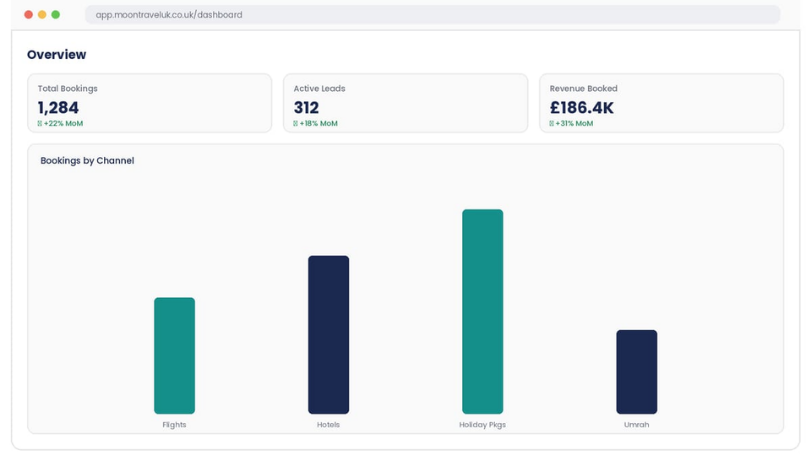
Booking platform + CRM + Automated workflows
For Moon Travels, we brought three booking services, customer records and recurring workflows together in a custom platform. The team gained a more organised way to manage bookings and customers.
Flight, hotel & holiday bookings
Concept through launch
The published case reports approximately 7 hours of recurring operational effort saved each month through automation.
Source: Cypder’s published Moon Travels case study.
Every project starts by understanding what the business needs, who it serves and how the solution needs to work.
Custom software makes sense when existing tools cannot support an important workflow, require too much manual work or create limitations that affect how the business operates. The right approach may also be a combination of existing platforms and custom development rather than replacing everything.
Yes. A customer-facing website and the software behind it can be designed as one connected system when the project requires it. This is useful when the website needs to interact with customer accounts, internal workflows, CRM data, ecommerce functionality or other business systems.
Yes, where the existing platform provides suitable integration capabilities. APIs can be used to connect websites and applications with CRM, ERP, payment, inventory and other third-party systems so relevant information can move between them.
That is common at the start of a custom software project. We can begin with the business problem, existing workflow and desired outcome rather than starting with a fixed list of features. From there, the product structure and technical requirements can be defined before development begins.
Yes. Cypder Solutions can build e-commerce websites with standard shopping features as well as custom functionality around products, pricing, ordering, customer accounts, payments, integrations and business-specific workflows.
Tell us what you want to launch or improve,
the tools you use and the work you want to simplify.
Technology • Growth • Systems