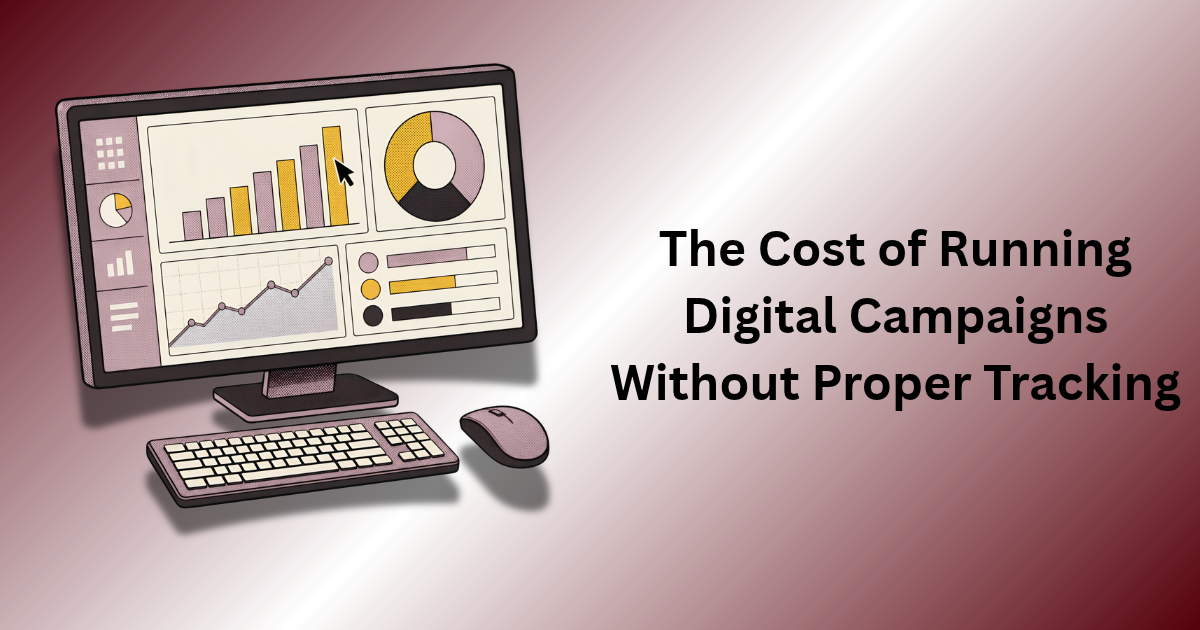
A digital campaign can generate clicks, traffic, leads, and even conversions without giving a business a reliable understanding of what is actually working. For any digital marketing strategy, this creates a serious problem: when tracking is incomplete, businesses are forced to make decisions without knowing which campaigns, audiences, and channels are contributing to meaningful results.
The cost of poor tracking is not limited to inaccurate reports. Businesses can continue investing in campaigns that attract low-quality leads, overlook channels that are generating valuable customers, or make budget decisions without understanding where conversions are really coming from. Proper tracking gives marketing teams the evidence needed to understand what is generating value, where prospects are being lost, and which areas deserve further investment.
Incomplete Tracking Can Distort Where the Budget Goes
Marketing budgets are often adjusted according to performance data. When that data is incomplete, budget allocation can become misleading.
A channel generating a high number of low-quality leads may receive more investment simply because its cost per lead looks attractive. Meanwhile, another channel that produces fewer but more valuable opportunities may appear expensive and receive less budget.
A useful measurement framework should connect campaign data with:
- Lead quality : whether enquiries match the target customer profile
- Conversion quality : whether leads progress towards meaningful sales conversations
- Acquisition efficiency : how much it costs to generate valuable opportunities
- Pipeline contribution : whether marketing-generated leads enter the sales pipeline
- Revenue contribution : whether those opportunities eventually create business value
This is particularly important when working with a performance marketing agency, because campaign optimisation should ideally be based on meaningful conversion signals rather than simply maximising the number of recorded leads.
Conversion Tracking Needs to Reflect Real Intent
Not every action taken on a website represents the same level of buying intent. A page view, content download, newsletter subscription, contact form submission, demo request, and completed purchase should not automatically be treated as equivalent conversions. If they are grouped together, the resulting data can make a campaign appear stronger than it actually is.
A more useful tracking structure distinguishes between different actions and assigns importance according to their relationship with the sales process.
This allows marketing teams to understand which campaigns are producing:
- Initial engagement
- Genuine enquiries
- Qualified opportunities
- Sales conversations
- Customers
The further marketing measurement can connect with the actual customer journey, the more useful the resulting data becomes.
Tracking Should Continue Beyond the First Lead
For businesses with longer sales cycles, the first conversion is rarely the end of the journey. A lead may require several interactions with the business before becoming an opportunity or customer. If marketing data stops at the initial form submission, the business loses visibility into what happened afterwards.
Connecting campaign and website data with CRM or sales information can provide a much clearer picture of lead progression. It helps identify which acquisition sources are producing leads that actually move through the pipeline and which ones are creating volume without sufficient commercial value. This is one of the most important differences between measuring leads and measuring marketing contribution.
The first tells you how many people responded. The second helps you understand whether those responses created genuine business opportunities.
Tracking Should Be Part of the Marketing Infrastructure
Measurement should not be treated as something added after campaigns are already running. The tracking framework needs to be considered alongside campaign structure, website conversion paths, analytics, CRM processes, and reporting requirements.
This is particularly important when multiple channels are involved. A digital marketing agency managing SEO, paid campaigns, content, and conversion activity needs consistent measurement across those areas if the business is expected to understand their combined contribution.
The purpose is not to track every possible interaction. It is to identify the signals that matter and make sure they can be captured accurately enough to support better decisions. Good tracking should answer three fundamental questions:
Where is demand coming from?
What happens after someone engages with the business?
Which marketing activity is contributing to valuable outcomes?
When those questions can be answered with reliable data, optimisation becomes much more deliberate.
How Cypder Solutions Connects Marketing With Measurement
At Cypder Solutions, measurement is considered part of the digital growth infrastructure rather than a reporting task that happens after campaigns are launched. SEO, performance marketing, website experience, conversion activity, and lead nurture need reliable data if they are going to work together effectively.
The objective is to understand not just where traffic or leads are coming from, but how those interactions progress towards meaningful business outcomes. That creates a stronger basis for campaign optimisation, budget allocation, website improvements, and broader marketing decisions.
This approach also makes it easier to identify where the real constraint lies—whether that is acquisition, conversion, lead quality, or the transition from marketing-generated demand into the sales pipeline.
Conclusion
Digital campaigns can only be optimised as effectively as the data behind them allows. Without reliable tracking, businesses may see the numbers but still miss the story those numbers are supposed to tell.
Proper measurement connects the stages that are often viewed separately: campaign activity, website behaviour, lead quality, sales progression, and business outcomes. That connection makes it possible to invest more intelligently, identify problems earlier, and improve marketing based on evidence rather than assumptions.
Cypder Solutions brings this measurement-led approach into SEO, performance marketing, and conversion strategy, helping businesses understand not just where their digital activity is happening, but what that activity is actually contributing to growth.
Key Takeaways
- Tracking is what turns marketing data into useful decision-making. Clicks and leads become more meaningful when they can be connected to quality, progression, and business outcomes.
- Lead volume alone can be misleading. Marketing performance needs to account for the quality of opportunities and what happens after the initial conversion.
- Reliable measurement improves more than campaign optimization. It can reveal problems across landing pages, conversion journeys, lead qualification, and budget allocation.
Frequently Asked Questions
Why is proper tracking important for digital marketing campaigns?
Proper tracking helps businesses understand which channels, campaigns, audiences, and actions are contributing to meaningful outcomes. Without it, optimisation and budget decisions may rely on incomplete information.
What should businesses track beyond clicks and impressions?
Businesses should track meaningful conversions, lead quality, qualified opportunities, customer acquisition cost, sales progression, and where possible, revenue contribution.
Can poor tracking lead to wasted advertising spend?
Yes. If campaigns are optimised around incomplete or low-value conversion data, budget can be directed towards activities that generate volume without producing enough qualified business opportunities.
How does CRM data improve marketing measurement?
CRM data shows what happens after a lead is generated. Connecting marketing data with sales progression can reveal which channels and campaigns are producing leads that actually become opportunities and customers.
Should SEO and paid advertising use the same tracking approach?
Their specific metrics will differ, but both should connect with meaningful business outcomes. This allows businesses to understand not only traffic and campaign performance, but the quality and commercial value generated by each channel.