Digital marketing has always evolved with changes in technology, customer behaviour, and data. But AI and automation are changing more than the tools marketers use. They are changing how campaigns are planned, how audiences are understood, how content is developed, and how businesses move prospects through the buying journey.
The shift is not simply about using AI to create content faster or automating repetitive marketing tasks. The bigger opportunity lies in using technology to make marketing more responsive, data-driven, personalised, and scalable while keeping human strategy at the centre. For businesses, this means the future of digital marketing will depend less on how many tools they use and more on how effectively those tools work together.
How AI Turns Marketing Data Into Actionable Insights
Marketing teams have access to more data than ever, from campaign performance and customer behaviour to website interactions, search trends, and conversion activity. The challenge is no longer collecting data; it is understanding what that data is actually telling the business.
This is where AI in digital marketing can make a meaningful difference. AI can analyse large volumes of marketing data, identify patterns in audience behaviour, evaluate campaign performance, and uncover changes in content engagement or conversion activity that may be difficult to spot through manual analysis. When combined with AI and automation, these capabilities can help marketing teams process insights faster and respond to opportunities more efficiently.
Automation Is Making Customer Journeys More Responsive
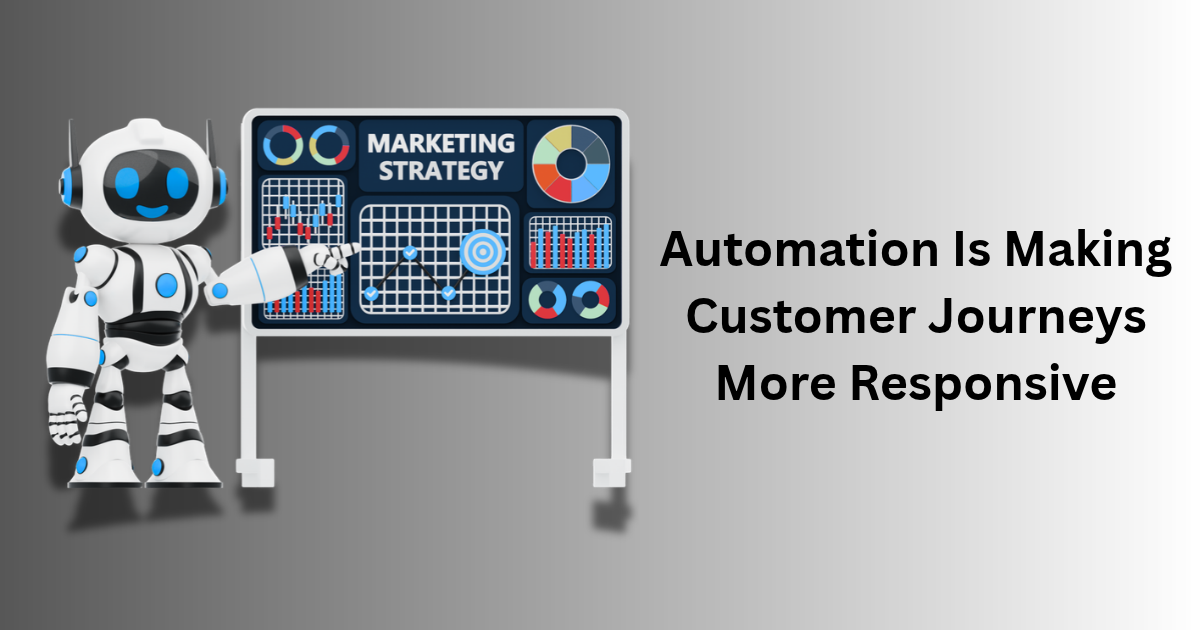
Marketing automation is moving beyond scheduled emails and basic workflows. Businesses can now connect customer actions with different stages of the marketing and sales process, allowing communication and follow-up to become more relevant to individual behaviour.
This is particularly valuable for businesses with longer buying cycles, where a prospect may interact with multiple pieces of content before becoming ready to speak with a sales team. Automation can help maintain that relationship without requiring every interaction to be managed manually.
A well-designed automation system can support:
- Lead segmentation based on behaviour and engagement
- Timely follow-ups based on customer actions
- Lead scoring and prioritisation
- Personalised communication at different funnel stages
- Sales notifications when stronger buying signals appear
- Re-engagement of inactive prospects
The value comes from designing these workflows around the customer journey rather than simply automating everything possible. Poorly planned automation can create more communication without creating more relevance.
AI Is Changing the Role of Content in Digital Marketing
Generative AI has significantly reduced the time required to research topics, create drafts, develop variations, and repurpose existing content. But faster content production does not automatically mean better marketing.
As AI-generated content becomes easier to produce, generic information becomes easier to replicate. This makes original expertise, useful insights, strong opinions, and industry-specific knowledge more important, not less.
For a digital marketing agency, the challenge is therefore shifting from producing more content to producing content that gives audiences a reason to pay attention. AI can support research, ideation, content analysis, and production workflows, but strategy still needs to determine what should be created, who it should serve, and what business objective it supports.
The same principle applies to SEO. Search visibility increasingly depends on relevance, topical depth, useful information, and credibility. AI can accelerate the content process, but it cannot replace the need for a clear content strategy or genuine subject expertise.
The Next Stage Is Connecting AI, Automation and the Full Marketing System
AI and automation become significantly more valuable when they are connected across different marketing functions. SEO insights can influence content planning. Campaign data can reveal changing customer interests. Website behaviour can inform lead scoring. Conversion data can identify where the customer journey needs improvement.
This is why a full stack digital marketing service is becoming increasingly relevant for businesses that want their marketing channels to work as one system rather than as separate activities.
The objective is not to automate every part of marketing. Some areas benefit from automation, while others require human expertise, creativity, judgement, and direct understanding of the customer.
The stronger approach is to identify where technology can remove repetitive work, improve decision-making, or increase personalisation, and then connect those capabilities to a clear digital marketing strategy.
How Cypder Solutions Helps Businesses Adapt
At Cypder Solutions, AI and automation can be integrated into a broader digital growth strategy that brings SEO, performance marketing, conversion infrastructure, and lead nurture together.
The focus is on using technology where it can create practical improvements in marketing efficiency and customer journeys while keeping business objectives at the centre. From improving how leads are managed to using data for better campaign decisions, AI and automation can support a marketing system that is easier to measure and optimise.
This approach helps businesses move beyond using AI as an isolated tool and towards building digital marketing processes that are more connected, scalable, and focused on measurable outcomes.
Conclusion
AI and automation are not simply making digital marketing faster. They are changing how businesses understand customers, make marketing decisions, manage campaigns, create content, and build relationships with prospects.
The businesses that benefit most from AI will be those that understand where automation can improve efficiency, where AI can strengthen decision-making, and where human expertise remains essential. At Cypder Solutions, this balance means using technology alongside marketing expertise to help businesses improve visibility, create stronger customer journeys, and turn digital activity into measurable growth.
The future of digital marketing is not AI versus marketers. It is about using technology to handle scale and complexity while marketers bring the strategy, creativity, context, and judgement needed to make those capabilities genuinely useful for the business.